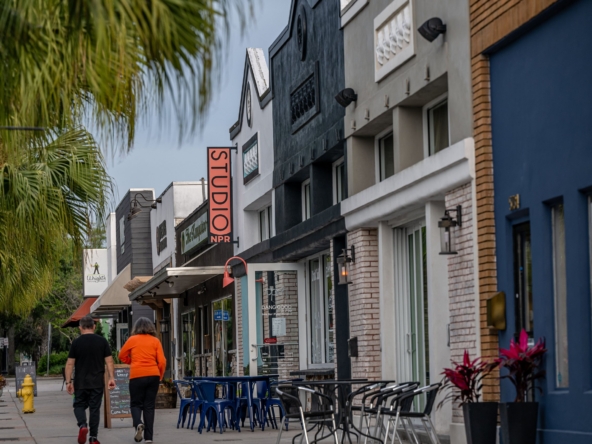
The right tenant mix is the combination of uses, credit quality, and lease terms that keeps a shopping center full, keeps sales strong for every tenant in it, and protects net operating income through a full market cycle. It is not a one-time leasing decision. It is a merchandising plan that the owner or manager revisits every time a space turns, because each new lease either strengthens the center as a whole or quietly weakens it.
What tenant mix means for a shopping center’s income
A center is more than the sum of its rent roll. Tenants share customers, parking, and visibility, so one tenant’s traffic becomes another tenant’s sales. A grocery anchor feeds the dry cleaner, the nail salon, and the sandwich shop in the same row. When the uses complement each other, every tenant sells more, renewals come easier, and rents hold at market without extended vacancy.
The reverse is also true. Three competing pizza shops in a 40,000 square foot center do not add traffic; they split it. These mistakes show up as weak sales, early terminations, and spaces that need to be released every few years. Anyone working on reducing vacancy in a strip center or plaza will often find that the mix, not the rent, is the underlying problem.
Anchors, junior anchors, and inline tenants play different roles
Each category of tenant contributes something different, and the mix should be built with those roles in mind.
- Anchors drive repeat visits. Grocery, pharmacy, fitness, and discount retail bring customers back weekly, which is why anchors pay the lowest rent per square foot and often hold the most negotiating power.
- Junior anchors in the 10,000 to 30,000 square foot range add a second reason to visit. Pet supply, off-price apparel, home goods, and medical users fit here.
- Inline tenants pay the highest rent per square foot and depend on the traffic the anchors generate. Restaurants, personal services, cellular stores, and local retailers make up most of this space.
- Outparcels and end caps offer drive-thru capability, signage, and visibility that justify a premium. Quick-service restaurants, banks, and coffee concepts compete for these positions.
When evaluating a prospective tenant, ask which role it fills and whether the center already has that role covered.
Matching the tenant roster to the trade area
The trade area decides what will succeed. A center on a commuter corridor in Pinellas County serves a different customer than one surrounded by new rooftops in Pasco. Before targeting a category, review the demographics within a one, three, and five mile radius, the daytime population from nearby employers, and the uses already present at competing centers. A medical office cluster next door supports a pharmacy, a lab, and a lunch spot. A neighborhood of retirees supports services and sit-down dining more than a trampoline park.
Traffic counts and ingress matter as well. A tenant that depends on impulse visits, such as a coffee concept, needs a signalized entrance and visibility from the road. A destination use such as a dental office can take a less visible space at a lower rent.
Use restrictions, exclusives, and co-tenancy clauses
Much of the tenant mix is written into the leases themselves, which is why lease administration and leasing have to work together.
- Exclusive use clauses promise a tenant that no other tenant in the center will sell the same primary product. An exclusive given to a pizza restaurant blocks a future Italian concept and may block a sandwich shop that sells pizza by the slice. Every exclusive should be narrow and tracked in a single schedule the leasing team checks before any letter of intent is signed.
- Prohibited uses keep out operators that hurt the center’s image or overload parking, such as adult uses, pawn shops, and uses that generate odors or noise next to food tenants.
- Co-tenancy clauses let a tenant reduce rent or terminate if an anchor closes or occupancy drops below a stated level. They tie the whole center’s income to one tenant’s decision, so owners should resist them or limit the remedy to a short rent reduction with a cure period.
- Radius restrictions keep a tenant from opening a competing store nearby, which protects the sales that support percentage rent.
A center that has never kept an exclusives schedule often has conflicts already baked in. Reading every lease and building that schedule is one of the first tasks in professional retail property management, because a violated exclusive can trigger rent abatement or a lawsuit.
Balancing national credit with local operators
National and regional tenants bring credit, signage recognition, and easier financing. Lenders and buyers underwrite a center with a strong national roster at a lower cap rate. Those tenants also negotiate harder, ask for more tenant improvement money, and sometimes take longer to open.
Local operators fill the center with uses that nationals do not offer, often sign faster, and are more flexible on space configuration. Their credit is weaker and their failure rate is higher, so the owner should size the tenant improvement allowance and the security deposit to that risk. A personal guaranty from a local operator is standard and should not be waived.
A healthy mix usually leans on credit tenants for the anchor and junior anchor positions and uses local operators to round out the inline space with restaurants and services that give the center a neighborhood identity. A roster that is entirely local in a 100,000 square foot center will have trouble at refinancing, and a roster that is entirely national in a 15,000 square foot strip is unlikely to materialize.
How the mix affects CAM, parking, and operating hours
Tenant mix drives operating costs, not just income. Restaurants need grease traps, extra trash service, and more frequent parking lot cleaning. A gym keeps lights and security running longer. Medical users add waste handling requirements. These costs flow into common area maintenance, and tenants whose leases cap CAM increases will push the overage back to the owner. Review how a prospective use changes the expense pool before agreeing to the rent.
Parking ratios are a practical limit. Most municipal codes in Tampa Bay require more spaces per square foot for restaurants than for retail, and a center that adds a third restaurant without the parking to support it will hear about it from every other tenant. Hours matter too. A late-night bar next to a children’s tutoring center creates friction for both, and the lease should set operating hours that fit the center as a whole.
Reviewing the mix at every lease expiration
The tenant mix is managed over time, not set once. Every expiration is a chance to upgrade a space, relocate a tenant to a better fit, or recapture an underperforming use. A practical review cycle looks like this:
- Maintain a stacking plan showing every tenant, use, square footage, rent, expiration, and option.
- Collect sales reports where the lease allows it and compare sales per square foot across the center.
- Rank the merchandising gaps. If the center has no coffee, no medical, and no fitness, those become the targets for the next vacancy.
- Decide a year before expiration whether to renew, relocate, or market the space for a different use.
- Update the exclusives and prohibited use schedule after every new lease.
This is the same discipline a retail property manager applies to budgeting and CAM reconciliation. A center with a deliberate merchandising plan commands higher rents, lower turnover, and a better price at sale.
Verdad CRE offers commercial property management for retail centers and multifamily properties across Tampa Bay, including lease administration, leasing coordination, and the tenant mix planning described here. Owners who want a second opinion on their center’s roster are welcome to get in touch.